Changes, books and movement!

Well, I’m back with an announcement on the blog site…Amma’s Tales’ very first volume, “Tales of How and Why” is in bookstores in Bangalore and Chennai and should be available at other stores all over India in a few weeks’ time. And if your local bookseller doesn’t have a copy ask them to get it for you and spread the word :)

Also we will have our own retail store selling the books up and running soon…we’ll keep you all informed and up to date….

As for this blog, you may find stories you’ve read before (or want to read again) have vanished. It’s all part of our move from a  blog space to bookshelves…YOURS! So only a few stories will remain on the blog…of course, brand new stories will be published for a short while but then may vanish… so remember to get a shot of Amma’s  Tales regularly! Thanks to every one of you for all your encouragement!

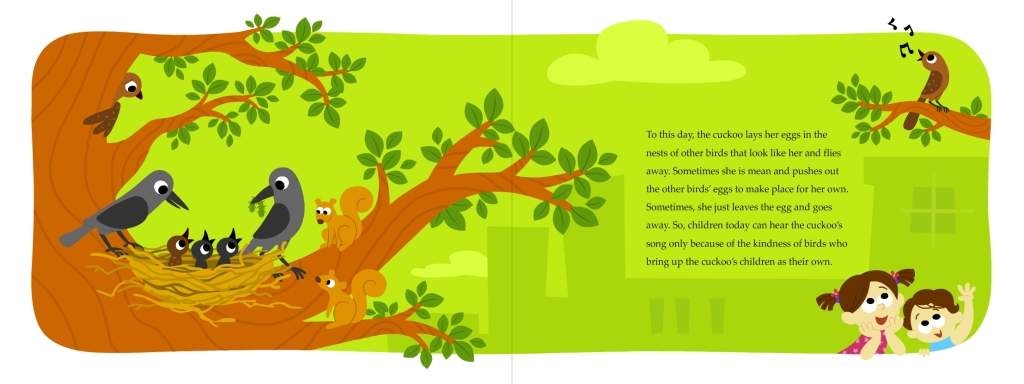
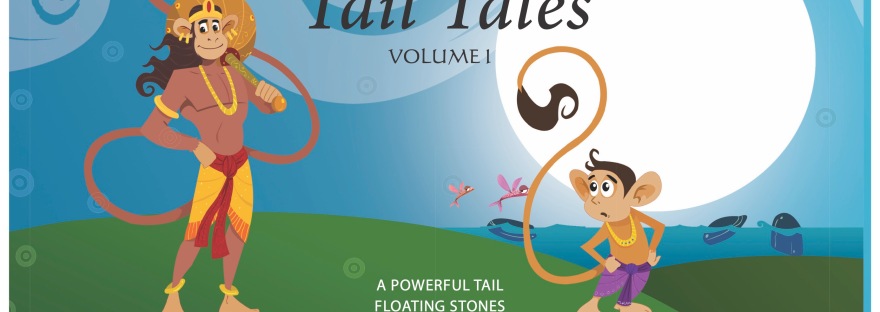
And so here’s an excerpt of stories (low res images) that are in the first volume. The book is for children aged 3 upwards and is perfect for children ages 6 upwards to read on their own! Do head to the stores and help make Amma’s Tales a success. For any additional info for marketing or buying the books you can write to ammastales@gmail.com…Thanks!

Hiatus and back

Well, it’s been a long and torturous journey for my last blog post…I have my excuse ready though for my legions….errrr…five readers…

I was …..

BRINGING OUT AMMA’S TALES VERY FIRST PICTURE BOOK!!!

The book is called “Tales of How and Why” and is for children over the age of 3 and has four animal tales…the books are beautifully illustrated and feel very modern…but why take my word for it? Look here over the next month for excerpts of the book…And you can order them here (and some other sites as well) too…

So watch out for updates at Amma’s Tales!

Crushing Love

The Mahabharata is an epic that shows the extremes of everything-love, hate, duty, betrayal, loyalty. Search for an example and thou shalt see. Of course, it’s a perfect example of the age-old adage: Spare the rod and spoil the child! In a brilliant example of how Aesop and Vyasa were probably right, Gandhari and Dhritarashtra unleash their oh-so spoilt offspring upon the earth. And even after the tremendous sorrow and destruction left in their wake, the besotted parents just can’t seem to see the light! The story goes:

The great war of the Mahabharata had just been concluded. The Pandavas took toll of their victory- the friends dead and, in a case of absence making the heart grow fonder, their enemies who seemed not so bad to have deserved such a fate.

With a heart filled with remorse and sorrow, Yudhisthira viewed the task on hand with great distaste. How could he walk up to his uncle, Dhritarashtra, and claim the throne of Hastinapura for himself? It just didn’t seem right! Turning to Krishna he said, “Krishna, it seems rather callous and quite two-faced to go now and claim my throne while trying to comfort my uncle for the loss of his hundred sons on the battlefield. Who all died because of ME!”

Krishna replied, “Yudhisthira, it is unfortunate that while you both are united in grief over the loss of dear ones, it still is your lot to stake your claim. Your uncle knew what he was getting into. Instead of guiding his sons along the right path and taking a firm hand with them, he decided to turn a blind eye to justice. His actions are just coming back to haunt him.”

Only mildly encouraged by Krishna’s words and still having to deal with the dreaded task, Yudhisthira and his brothers prepared to meet their uncle and aunt.

In the opposing camp, the feelings were no less mixed. Dhritarashtra had been warned that Yudhisthira would be coming to take over the throne. “Ha!” thought Dhritarashtra. “What use is the throne to me now anyways? I have no son to rule after me. Perhaps I should’ve listened to my brother, Vidura, and left before this whole mess started! Duryodhana, why did you not listen to me when I asked you to be fair to your cousins? And now you and your brothers are all gone. A heavy price to pay for your wilfulness!”

As he pondered his sons’ deaths, his sorrow slowly gave way to a sense of unfairness about it all. Slowly Yudhisthira transformed from a nephew who only had asked for fairness, to an unfair conqueror set upon a throne that did not belong to him.

“Who does he think he is anyway?” thought Dhritarashtra. “First he destroys the entire line of rightful kings to the throne of Hastinapura! All hundred of them! He kills his own teachers and brothers in war. And now he has the gall to come here and seek my blessings!” As the thought gathered force in his head, his sorrow was replaced by an all-consuming hatred and anger.

Gandhari, his wife and queen, was mourning her own loss as well. “Ah Duryodhana! If only you had let me protect you well!” she thought (see Achilles’ thighs posting). “And all for a kingdom. And yet, I cannot forgive your death. Why should all five of Kunti’s sons survive and I be left with not even one? My sorrow is a hundred-fold magnified with the loss of every son!”

With their conflicting emotions swirling in their heads, the blind king and his blindfolded queen entered the court to officially meet the victorious Pandavas. Although neither could see anything, they felt with their hearts and minds the joy the people felt upon seeing Yudhisthira, Bhima, Arjuna and Nakula and Sahadeva return in triumph. Their hearts tore with anguish at hearing the praises and adulation lavished upon the Pandavas. Gandhari felt a stab of jealousy go through her as she waited for the procession to reach them. “When my Duryodhana was alive, the people did not show him any such affection. Perhaps he might have been a better man if he had known that the people loved him,” she thought. Dhritarashtra, feeling equally miserable at the love the Pandavas were receiving, felt his mounting anger envelop him completely. “My son was killed in a cowardly fashion by Bhima. And here he is pretending to be a hero. What kind of justice is this? Bhima is the true cause of my sorrow,” he thought, silently fuming.

Yudhisthira approached the king and queen cautiously. “O king and queen, we have come here to mourn with you the passing of all who have been near and dear to us. I hope you will find it in your hearts to forgive us for this war and its great human cost,” he said.

Hearing his humble words, Dhritarashtra’s anger cooled momentarily. But only for a flash. Composing himself he held out a hand and said, “You have nothing to apologize for. My son, Duryodhana, refused to listen to reason.  He provoked this war and destroyed our entire clan. I hope you will be a good and righteous king. Where is Bhima? I want to show him that I still love him and bear him no ill-will…” Dhritarashtra stepped forward holding out his arms as if to embrace Bhima.

Surprised at being singled out for his uncle’s attention, Bhima stepped out from the back of the pack where he had been hovering so not to cause unnecessary pain to his uncle and aunt. Just as he was about to step into Dhritarashtra’s arms, Krishna silently pushed him out of the way. Hauling out a large iron replica of Bhima (that was used as target practice by Duryodhana), Krishna directed Dhritarashtra to the statue. The anger in the king found its focus and poured forth as he enveloped the statue in a crushing embrace. The power of his rage reduced the statue to rubble  in front of Bhima’s horrified eyes.

As the old king felt the statue give way under his embrace, the anger that had flooded his mind and heart left as well. Overcome with remorse over what he had done, Dhritarashtra fell to his knees and mourned, “Oh my God! What have I done? I am much worse than my son. I know what is just and yet I have behaved monstrously and killed Bhima.” Filled with self-loathing Dhritarashtra lay there until Krishna came up to him and said, “Do not worry. Bhima is alive and well. Anger had distorted your thinking but now you are free of it.” A relieved Dhritarashtra, continued with the rest of his blessings to the Pandavas without major incident.

As the Pandavas made their way to Gandhari’s chambers, Yudhisthira spoke to Krishna. “Krishna, what am I going to say to my aunt? Of all the people in this palace, she has always been good to us. I truly feel like a heel!”

Krishna said, ” Don’t worry too much. It will go well. Gandhari is a good woman and knew her son was headed down a path of no return. She will forgive you.” What Krishna left unsaid was a niggling doubt in his mind that maybe Gandhari too needed more time to get over her loss.

As they entered her chambers, Gandhari rose to receive her guests. Hearing the sound of Yudhisthira’s voice raised in greeting as he walked towards her, the anguish of having lost her son washed over Gandhari. Anger coursed through her and as Yudhisthira bent to receive her blessing, Gandhari lifted and edge of her blindfold. In the nick of time, Krishna noticed her gesture and pushed Yudhisthira out of the way. As Gandhari’s hatred and anger found its way through her searing glance, Yudhisthira’s big toe blackened and  withered where just moments ago his head would have bent at Gandhari’s feet. Shocked and appalled at what she had done, Gandhari bowed to Krishna. “Thank you, Krishna” she said. “If not for you I would have been guilty of committing a very grave crime.”

Turning towards Yudhisthira, she continued, “I hope you will forgive me. I see now where my love for my son has blinded me to justice…eroded my sense of right and wrong. I see now that I and my husband cannot tarry here a moment longer.”

Yudhisthira, understanding his aunt’s agony nodded his assent. And with that the old king and queen with their trusted advisor Vidura, left the kingdom of Hastinapura to spend the rest of their days in the forest.

And so the Mahabharata showed once again through wrong can emerge right and from right wrong. And parents blinded to an offspring’s faults, will still love them even while acknowledging their defects. Even if it’s at the end of an unnecessary, bloody war!

©Ammastales.com.  All rights reserved.

A tribute to one’s self

Amma’s Tales restarts after a fairly long hiatus. Sorry folks, but life outside of this world interceded!

With that out of the way, we begin with a story on Shiva. Amma says, the lingam representations of Shiva are considered very special with each one having a special significance (see Knock on the head)! And lingams made by Shiva himself ought to be even more special!! The story goes:

It was time for the world to come to an end. Brahma thought, “Ah! Pralayam! The end of the world…a chance to begin afresh, and get rid of what was old and not working. Sweep my mistakes under the proverbial rug and get a free do-over! I love my job!”

Brahma started up the process of destruction of all creation…the plants, the animals…all life would be submerged. He took the nectar of immortality, prized by the devas, and was wondering where to keep it safe during the upheaval that was sure to occur during the pralayam.

As Brahma pondered the question, he wandered over to Shiva to seek his help. He said, “Shiva, I need a really safe place to keep these things. But the flood waters sometimes get really powerful and I am worried the nectar will get washed away. What can we do?”

Shiva thought about it for a bit and then said, “Here’s my kamandalu. Keep the nectar in it! I will seal it with a coconut and then you can be sure this will not break. Leave it on Mount Meru, that ought to be high enough.”

Satisfied, Brahma said, “Now I am little relieved. Onto the pralayam then! “

With a new bounce to his step, he stashed away the kamandalu atop Mount Meru, the tallest mountain on earth, and Brahma settled down for the long penance. As Brahma concentrated his power upon the task at hand, the seas whipped themselves into a fury. Winds howled and rains lashed the earth. The sea water rose alarmingly, churning itself in fury. The waves crashed upon the land and chunks of the earth were submerged. Trees toppled and cities vanished.

Lost in meditation, Brahma didn’t even notice the cataclysm that was taking place. He didn’t see that the power of his penance, had made the seas rise so high, the waves were threatening to envelop the heavens as well!

The devas were also watching the earth slowly get drowned. Suddenly, Agni, the god of fire shouted in alarm, “Look, the waves are crashing onto Mount Meru itself! The nectar has been washed away!”

Indra, the king of the devas, and all the assembled devas watched in horror as the kamandalu carrying its precious cargo floated away. They tried shouting to Brahma to wake up and rescue the vessel, to no avail! Brahma was completely immersed in the task at hand. Panicking, the devas rushed to Shiva and said, “O Shiva, it’s a catastrophe! The kamandalu with the nectar of immortality is lost to the floods. What will happen if the nectar falls into the hands of the rakshasas? You must help us! Brahma is so lost he doesn’t realize the grave danger he has placed the world in!”

Calming the worried devas, Shiva said, “Don’t worry. The kamandalu is mine and I have sealed it so nothing will be lost. Let the pralayam work itself out. I will then go and rescue the nectar.”

After the seas had subsided and the world was calm again, Shiva sprang down to the earth. He spotted the kamandalu where it had wedged itself into a deep crevice in the earth.

“Hmm,” thought Shiva. “This is a stickier situation than I had thought! If I pull this with all my power, it is bound to crack in Bhoomidevi’s grip. And I don’t want to accidentally spill any of the nectar.”

Finally he decided what he had to do. He said to Indra, “Indra, I am not going to be able to rescue the vessel intact. But I will make sure no one will be able to take unfair advantage of the nectar.”

Then Shiva bent and caught hold of the vessel that contained the nectar and he cracked it open himself. The nectar gushed out only to be caught in Shiva’s hands and guided safely into a waiting vessel. But one drop managed to escape and dripped to the ground. As the drop of nectar seeped into the ground, Shiva quickly bent down and fashioned the earth there into a lingam. Miraculously at the same time, the broken kamandalu also transformed itself into a lingam.

And so, Shiva saved the nectar of the gods from wasting away. And even today, near Kumbakonam, Tamil Nadu, the lingams of the Kumbeshwarar (the pot itself) and Someshwarar (from the earth that had the nectar) temples stand in tribute to the deity who created them.

©Ammastales.com.  All rights reserved.

Dead end…

In the Mahabharata, many lives were lost due to one low blow (see Achilles thighs? posting and Krishna’s balancing act). But none was more tragic than the entrapment of Arjuna’s son, Abhimanyu. Amma says, in cornering and deviously getting rid of Abhimanyu, the Kauravas made sure that they would have an eternal enemy in Arjuna and set a precedent for many devious acts that first make their appearance on the battlefield in the Mahabharata. The story goes:

Arjuna, the third son of Kunti by Indra (see The last straw posting) was married to Subhadra, Krishna’s sister. Beautiful and talented, Subhadra was one of Arjuna’s favourite wives. One day, Arjuna came to visit Subhadra, who was pregnant with their child, looking very excited. “What’s the matter?” asked Subhadra. “You look like you just won a prize!”

“Well,” said Arjuna. “It’s nothing really. Its just that my guru, Drona, taught us an amazing manoeuvre today.” “Oh god,” thought Subhadra. “There he goes again! These military things he learns are sooooo boring. But I really must try to be more interested.” Keeping her thoughts to herself, she said to Arjuna, “Well, why don’t you relax a little and tell me what happened today.”

An excited Arjuna settled down and started telling Subhadra about what he found so interesting. “You know Subhadra,” said Arjuna, “our guru is loves us so much. Especially me. I have tried my best to learn everything he has taught us and to put it to good use and I think he realizes this.” Subhadra nodded as Arjuna continued. “Well, today he asked me to stay back and said I should learn about a particular manoeuvre called the ‘chakravyuha.’ “

“What is that?” asked Subhadra. Arjuna, pleased with his wife’s interest in his newfound knowled,ge started to talk expansively on the topic. “The chakravyuha is a way to trap the enemy with no place for him to run to,” Arjuna started saying. “You let the enemy into a circular formation and then cut him off from the rest of his soldiers by closing the circle. You have him at your mercy then,” he said with a warrior’s relish in the details.

“But then how would you ever defeat an enemy in that formation?” asked Subhadra, starting to get drawn into the conversation. “Well,” said Arjuna, “that’s where this knowledge comes in handy. Today Dronacharya taught me exactly how to break into such a formation and come out of it unscathed.”

And he started telling Subhadra the details involved, what tactics to use to breach the formation, how one would attack on the inside. A warm afternoon and a flagging conversation started having their effect on Subhadra and she started nodding off to sleep. “I’ll just close my eyes for a few minutes,” thought Subhadra. “I really feel sleepy and he’s got his back to me so he won’t even notice. I’ll  be awake before he even turns around!” She let sleep take over and nodded off.

Arjuna continued his lecture on the chakravyuha and hearing his wife’s occasional mutter of “hmm” he assumed she was listening to what he had said. It was a while before he reached the end of his speech and he turned around and said, “And Subhadra, you know, the most important thing is how to come out of the chakravyuha. You have to…” Trailing off mid-sentence, Arjuna realized his wife was fast asleep. Walking over to her, Arjuna was puzzled, “If Subhadra was asleep who was that who kept prompting me on? I must have been imagining things…” Shaking his head at his own foolishess, he gently settled his wife comfortably on the divan and left the room.

And thus it was that the child within Subhadra, Abhimanyu, knew how to enter the chakravyuha formation. He had been listening to what Arjuna was saying and had been making the sounds Arjuna had heard. During the great war of the Mahabharata, when Drona tries to use the chakravyuha to capture Yudhisthira because Arjuna was otherwise engaged, Abhimanyu steps in to defend Yudhisthira. He enters the chakravyuha but since Arjuna stopped talking before he said anything about coming out of the formation, Abhimanyu was trapped and at the end of a fierce battle was brought down only by the collective cunning and base tactics of Karna, Drona, Duryodhana and the other Kauravas.

©Ammastales.com.  All rights reserved.

A precocious child

A favourite deity in Southern India is Muruga, the brother of Ganesha. Amma says, as a god he is revered for his warrior temperament, quick to anger and brave like no other, and also for his intelligence. Muruga’s most famous tale recounts how he explained the meaning of Om (or Aum, the pranava mantra) to his father, Shiva. The story goes:

Once upon a time on a lazy summer’s day, Brahma decided to go shoot the breeze with his dear friend, Shiva. “It’s been a while,” he thought to himself. “I have not met Shiva and Parvati for a while now and their two sons must have grown up quite a bit by now. Let me go there today!”

Brahma went to Shiva’s abode and found it strangely quiet. “Hmm…I wonder where everyone is?” thought Brahma. As he wandered around the palace, he came across a little boy playing with his toys. He watched as the boy carefully constructed his toy armies and arranged the horses and elephants with precision.

“That’s an interesting game you are playing,” said Brahma. Startled, the little boy looked up to see Brahma smiling at him. “Well, these are my armies and I am defeating the rakshasas,” said the boy rather proudly. Brahma said, “You must be Muruga. You have grown quite a bit since I saw you last. Do you remember me?”

“Of course,” responded the boy confidently. “You are Brahma, the creator of the universe. I am honoured to have met you.” Bowing before Brahma, Muruga continued, “Are you looking for my father? He has stepped out for a little while and will be back soon!”

Brahma sat down next to the child and said, “That’s all right. I wanted to see you and Ganesha anyway, and so we can chat while we wait for your father.”

The little boy chattered away happily, telling Brahma about his life, his games, his fights with his brother (see Ganesha’s da man posting) and life at home. Brahma listened with patience and amusement at the little child’s enthusiasm. Then Muruga stopped suddenly and said, “Is it true, as the creator you know the answer to everything?”

“Well,” said Brahma rather pompously, “I probably know the answer to everything since I created most things, but why do you ask?”

Muruga said, “Yesterday, my mother was praying and kept repeating the word ‘Om.’ When I asked her why she did that she said it was a very important word and had a lot of meaning. But when I kept asking her the meaning, she said that since I was so full of questions I should ask Brahma himself when he comes home. And today you are here, and so I am asking you. What is the meaning of Om?”

Brahma was flummoxed as he realized, for all his knowledge and learning he did not know what this little boy wanted! Blubbering a little, Brahma said, “You know, you are asking a really clever question, but I am afraid I do not know the exact answer!”

Muruga jumped down from Brahma’s lap where he had been sitting and said, “What use are you as the creator if you do not know the meaning of something that is so important?” With a quick gesture, Muruga bound the hapless Brahma in ropes and told him, “One like you has no business controlling the universe. You are now my prisoner! I will only release you to someone who also knows the meaning of Om!”

Brahma said, “What do you mean ‘also’? Does that mean you, a small boy, claim to know the meaning?”

Without replying to the bound Brahma, Muruga shut the door to the room and locked in his captive. “But who will do my work?” shouted the hapless Brahma. “Creation must keep going on!”

Looking in through the window to the room, Muruga said, ‘Well, since I know the meaning I can take your job!” And so Muruga continued the task of creation while Brahma was imprisoned. He did what he wanted and so, the peacock had feathers that were beautiful but useless, he gave the camel its hump and generally was causing havoc. The devas rushed to Shiva and said, “Shiva, you had better stop Muruga. He’s imprisoned Brahma in his room and is doing as he pleases!”

Shiva rushed back and saw Muruga happily creating things and setting them loose on the world. “Stop, stop!” shouted Shiva. “Muruga! What do you think you are doing? Why have you locked up Brahma in that room?” Rushing to hug his father, Muruga stopped to consider what Shiva was asking him. “Well,” he started. “I asked Brahma if he knew the meaning of Om and he said no. If he doesn’t know the meaning he shouldn’t be in charge of creation, should he?”

Taken by surprise at the calm logic his son displayed, Shiva then said, “Well, what you say is true. But I don’t know the true meaning of the pranava mantra myself! And here you are, sitting and carrying on with the task of creation. Does that mean I should be locked up too and that you know the meaning?”

“Of course,” said Muruga as if the question was whollyridiculous. “Why else would I do Brahma’s task? I do know the essence of the pranava mantra. And since you don’t know the meaning, would you like to learn it from me?” Shiva, now proud of his son but humbled at the same time said, “Muruga, I would be honoured if you would teach me the meaning of Om. With that you will called swaminatha, one who is the lord of swami himself!”

But Muruga was not finished. “Father,” he said. “If I must teach you do I not then become your guru?” When Shiva nodded, Muruga continued, “Well then, you must bow before me and accept me as your teacher. And I must be seated higher than you as befits a guru!”

Smiling, Shiva agreed and carried the little boy who would be his teacher on his shoulder so that he was higher than god himself. Seated thus upon his father’s shoulders, on the mountain that would be called Swamimalai, Muruga explained the meaning of the pranava mantra to Shiva. And so to this day, the temple at Swamimalai in Tamil Nadu is revered as the place where a boy showed how he knew more than his father!

©Ammastales.com.  All rights reserved.

Thanks for reading!

I just noticed a teeny tiny thing today…at the bottom of my page a little thingy told me that today Amma’s Tales has officially had more than a 1000 readers! Yay! Thanks and happy reading…

The eye is where the…um…stomach is?

As stories go, the Indian epics, the Ramayana and the Mahabharata are filled with ghouls and ghosts and monsters galore to satisfy even the most die-hard Tolkien fan! Amma says, since the stories are driven by heroes and villains, and deep, dark and dangerous forests, the chances of coming across a really fearsome monster are quite high! Consider this:

Rama, Lakshmana and Sita were banished by Dasaratha to spend thirteen years in exile in the forest. Plotted by the misled queen, Kaikeyi, the royal directive led the three to take upon themselves the robes of wandering ascetics instead of the pomp and finery associated with a royal prince and his wife.

The three made their home in the depths of the Dandakaranya forest. A few years passed by. One day seeing a golden deer, Sita asked Rama to pursue it and catch it for her. The deer, a raskshasa Maricha in disguise, led Rama away and subsequently Lakshmana was sent to look for Rama. Meanwhile, the king of Lanka, Ravana, who had set his heart on taking Sita as wife, came upon her and lifted her away to his kingdom in his flying chariot. A distraught Rama and Lakshmana set off to search for Sita.

Rama said, “Lakshamana, what am I to do? There is no sign of Sita in this dark forest. We have nowhere to start with. I feel bogged down by failure even before we start!”

Lakshamana tried to put a brave face on it and said, Come on…we must not lose heart so easily. See, these broken branches and the sign of a struggle? Let us look for leads and see if we can rescue Sita before it is too late!”

As the two brothers started moving deeper in the Dandakaranya forest, it seemed as if the forest itself were conspiring against them. The trees grew closer together and the canopy was so dense no sunlight was allowed to illuminate their way.

Rama said, “This place is becoming eerie. I think it may almost be nighttime now, although I can’t even see the sky. Maybe we should stop for a little while and rest before we continue on our way.”

Lakshmana and Rama prepared a rough bed  and a fire to warm themselves and prepared to go to bed. Suddenly, Lakshmana straightened up and pressed a finger to his lips. Silent, the two listened. The earth seemed to be shuddering under the rhythmic impact of footsteps that were headed…their way! Immediately alert, the two slung on their arrows and prepared to meet whatever came at them. Suddenly the trees around them fell away, plucked like tiny twigs, and towering above them was the most gruesome monster they had seen! Large and with mottled skin, the hideous monster had no head. His gigantic torso ended at his neck and his long tentacle-like arms grew out of there! Instead of a face, he had a gigantic eye in the centre of his stomach just over a large, chomping mouth!

“My God!” exclaimed Rama. “What hideous abomination is this? Who are you?”

The monster replied, “Ha! You are surely more brave than wise, you tiny human weakling! You face your death and you stop to talk? But since you ask…I am Kabandha! This part of the forest is mine and I tolerate no trespassers. I eat them instead!”

Lakshmana, staring agape at Kabandha, could only reply, “But why is your mouth in your stomach?”

“The better to eat you with,” replied the monster, parsing from a favourite children’s story. “Why waste my time with the chewing and the swallowing? I will just push you through straight to the digesting part! Now enough of this chattering and come and hand yourselves over!”

As he charged at the brothers, they nimbly jumped aside to escape the mouth that snapped at them so eagerly! “What are we going to do, Rama?” yelled Lakshmana above the din of the monster’s snarling cries at missed prey.

Thinking quickly (no option really!) Rama said, “I think I have an idea that will work! Just follow me!”

“Hah!” yelled Rama at Kabandha. “You’ve got to do better than that to catch us!” Annoyed, the monster charged again and again the two jumped aside. “Rama, I hope your idea is not to keep doing this till he gets tired!!! It won’t work,” said Lakshmana.

“Don’t be smart,” said Rama. “Wait and watch and learn, my brother!” All the arrows the brothers had shot at him stinging his body still and his two failed charges at them had rattled Kabandha. “None have ever survived so long. You both are truly brave. The world will miss such courageous warriors and my stomach will be honoured!” he snarled as he came running at them for the third time.

This time around, Rama jumped nimbly onto the branches of a tree and swung himself on the torso of Kabandha. Taking his cue, Lakshmana did the same. Realizing what they had done, the monster tried to shake them off but the hung on. “To get rid of fleas, I will use a stick,” yelled Kabandha as he uprooted a tree to scratch them off his back.

“Quick,” said Rama, “we have only a small window of time. Divert him for a second but be safe.” Snorting in disbelief at what Rama was asking him to do, Lakshmana proceeded to rain arrows on the left side of Kabandha and distracted him.  Clambering across Kabandha’s broad back, Rama swung himself and using an arrow, shot into the monster’s eye blinding him. Howling with pain and unable to see anymore, Kabandha flung himself around, stomping and tossing with rage. Rama and Lakshmana, fighting to keep their balance on the giant’s shoulder, cut off the monster’s grasping arms. Felled by the wounds inflicted on him, Kabandha collapsed in a heap and Rama and Lakshmana jumped off his body. Suddenly, the huge body of Kabandha vanished and in his place was a shining gandharva (magical, heavenly being). Bowing before Rama and Lakshmana, he said, “For centuries I have been trapped in that horrendous body because of a curse. You have released me from it and now I am free to go back to my home. How can I ever thank you?”

Rama said, ” There is no need to talk of thanking us. We are glad we were able to help you. Unfortunately I wish I had never had the need to come here though.”

When the gandharva asked them what was troubling them, Rama replied, “My wife Sita has been abducted by someone and we don’t even know where to begin looking and for who we are looking. And now we are lost in this deep and dank forest.”

The gandharva said, “It seems I may be able to guide your steps after all. Go and look for Sugriva, the monkey prince. He is hiding from his powerful brother Vali. But if anyone can help you, it is he. He has the loyalty of many of the monkeys in the forest and not a leaf moves without them knowing about it. And as for this forest…” The gandharva waved his hand and the whole aspect of the forest changed. The trees looked happy once again instead of forbidding and the sunlight filtered in making the brothers’ journey easier. “It was because of my accursed presence as Kabandha that the forest was also cursed. You will not face any more perils on your way!”

Thanking them one last time, the gandharva vanished. Rejuvenated by their experience, Rama and Lakshmana continued on their journey with the hope of meeting Sugriva and finding out what had hapened to Sita.

And so, in the Ramayana, Rama meets Sugriva in the forest and takes a side, setting the stage for the rest of the Ramayana. For if they had met with Vali (see Original baby crib mobile posting) instead, maybe the Ramayana would never have been an epic!

©Ammastales.com.  All rights reserved.

Krishna’s balancing act

We begin the week with our final instalment in the story of Karna and how he met his end at the hands of Arjuna. Amma says, Krishna had a way of settling debts even if they were from generations and avatars ago. And the death of Karna was in some part a return on a debt to Indra. On finally releasing Karna, Krishna also made sure that he finally attained the salvation that was due to the great warrior who happened to be on the wrong side of justice.

After the end of Rama’s stay on earth, Vishnu returned to the heavens. He was met by a rather furious Indra who said, “Why did you shoot my blameless son Vali like that from behind a tree? You chose to befriend Surya’s son over mine for no reason at all. Gods cannot play favourites like that!”

Vishnu replied, “Indra, I know what I did was wrong but it was required of me to behave that way. No matter! I will make it up to you in my incarnation as Krishna. Your son will be born to the side that fights for justice and I will fight with him.”

Surya, then said, “Vishnu, I agree to what you have said. I only ask that just as Vali had the good fortune to meet his end at your hands, so should my son meet his end only at your hands.” Vishnu agreed to Surya’s request and partially mollified, Indra left, thinking, “Well even if you don’t do your best, I will definitely make sure my son is victorious over Surya’s!”

Indra’s son, Arjuna, and Surya’s son, Karna, were aligned on opposite sides in the Mahabharata and were mortal enemies. Krishna was fond of Arjuna and decided to fight on the side of the Pandavas when Duryodhana precipitated war against his cousins. The battle of the Mahabharata had begun in real earnest. The Kaurava army had suffered quite a few blows including the loss of their generals, Bhishma and Drona. A disheartened Duryodhana turned to his trusted friend Karna and said, “I place my faith in you. You are unrivalled as a warrior by all. I do not think even Arjuna can stand up to you. Will you lead my army now, to success?”
Karna said, “You are my friend. It is because of you the son of a charioteer can fight beside the greatest warrior of our times. I am forever in your debt. I will be more than happy to lead your army if it will show you my gratitude. “

Karna took over the army and inflicted a lot of losses on the Pandavas’ army. He faced Bhima’s son, Ghatotkacha, and using the Vajra astra given to him by Indra (see The last straw posting), killed him in battle. “Hmm, I have used up one of my most powerful astras that I wanted to save for my fight with Arjuna,” thought Karna. “But my army needed me to rescue them from the fearsome Ghatotkacha. No matter, I can still use the naga astra against Arjuna.”

As Karna began inflicting huge losses on the Pandavas, Yudhisthira summoned Arjuna and said, “It is time we defeated and got rid of Karna. Only you are his equal in prowess. I would like you to go forth and battle with him.” Agreeing, and rather relishing the prospect of finally meeting his rival in battle, Arjuna set off for his battle with Karna.

“Karna!” said Arjuna. “Your time has come. This battle between us can have only one winner and that will be me. I have justice on my side and Krishna as my inspiration. So come out and fight me if you dare!”

“Brave words!” said Karna. “Now let’s see if your actions can back them up!” Their fight was long and well-matched with neither giving an inch. It dragged on for days and the two warriors started growing tired with every passing day. Finally a frustrated Karna said to Salya, his charioteer, “Get a little closer to Arjuna. I am going to use the nagastram on him. This battle will end today.”

Salya, the uncle of the Pandavas, gave Karna some advice. He said, “Karna, the nagastram will have to meet its mark and must not miss. Aim for his heart and you will have him.”

Karna thought about Salya’s words and then said, “I respect your counsel, but Arjuna is a warrior and must be honoured as such. I cannot aim for the heart. I must aim for his head.”

Reciting the correct mantra so he could summon the nagastram, Karna took aim. Just as he released the arrow, Krishna pressed down on the earth and the chariot sank an inch down into the ground. The nagastram that would have taken off Arjuna’s head harmlessly took off his helmet and vanished into the heavens. “Phew!” said Arjuna, unaware of what Krishna had done to save his life.”That was a close call. But we have him now. He has lost his two most powerful astras.”

Smiling a little at his ward’s innocence, Krishna drove on into battle and it raged for long. Suddenly just as Karna wanted to race in at Arjuna, his chariot wheel got stuck in the mud. Cursing at the bad timing, Karna got down from his chariot and tried to get the wheel out (see Nails in the coffin posting). With Karna stuck in such a vulnerable position, Arjuna seized the chance and took aim. Karna shouted, “Arjuna, do not be such a coward as to shoot a man when he is unarmed. It is not right.”

As Arjuna faltered, Krishna said, “Karna, you are a fine person to talk. Where were all these principles when Arjuna’s son Abhimanyu, was helpless? Did you not join in then and kill an unarmed helpless warrior? A boy at that?”

Hearing Krishna’s words, Arjun’s anger and hatred of Karna boiled over and he let loose his arrow. Karna, in desperation, tried to summon a weapon that would deflect Arjuna’s arrow. Try as he might though, all his knowledge failed him. Not a single word of Parashurama’s teachings came to his mind when he most needed it (see A teacher’s wrath posting)  and the helpless, defenseless  Karna was shot down by Arjuna’s arrow.

As Karna lay there on the battlefield mortally wounded, his life would not leave him. Krishna transformed himself into a brahmin and approached Karna. He came beside the wounded warrior and said, “Karna, I have heard you are a person of great generosity. Will you not give this poor brahmin something?”

Karna looked at the brahmin and said, “What would you have me give you? I lie here wounded, waiting for my death. I have nothing to give you.”

The brahmin said, “Your life has been one of great generosity and goodness. I ask that you give me the effects of all that goodness (punya).” Karna signalled to the brahmin that he take out the arrow that pierced his heart. As Krishna did that, the blood flowed out of Karna and he breathed his last.

So finally, the great warrior met his end at the hands of Krishna and attained salvation. The son of Surya, known for his generosity and a bad run of luck, finally was victim to circumstance and  destiny. Vishnu kept his promise to both Indra and Surya and balanced his books with them. And when people have a narrow escape from something calamitous, the saying goes, “Thalai ki vandadu, Thalaippa oda pochchu!” (What came for the head went with just the helmet instead!)

©Ammastales.com.  All rights reserved.

The last straw

Amma’s Tales is back after sporadic blogging and a brief hiatus over the holiday season! Greetings and wishes to all from us here at Amma’s Tales and hope it’s been a  good year so far!! To start off the new year, we have a story about Karna, one of Amma’s Tales’ favourite-est characters!!

Karna, our oft occurring tragic hero, plays a central part in the Mahabharata. As the friend of Duryodhana and the arch enemy of Arjuna, he already has a striking role. Add to the mix a little dash of intrigue that he’s actually the Pandavas’ lost, never-acknowledged half-brother and he’s irresistible!!! As part of our continuing series on how Karna met his rather unfortunate end, there was one more incident that ensured he would never win a battle against Arjuna. The story goes:

Kunti, the mother of the Pandavas, was a young girl when her adoptive father, King Kuntibhoja, summoned her one day. “Kunti,” said the king, “We have an important visitor today. The sage Durvasa will be visiting us for a while. Will you take care of our guest while he is here?”

Kunti agreed and did all she could to make Durvasa’s stay a pleasant one. A year into his stay (it’s tough walking everywhere you know! Long breaks are key!) Durvasa said, “Kunti, I am pleased with the devotion you have shown me and you have made sure my stay here was happy. I am content and I am leaving this kingdom in a few days. I would like to show you my appreciation and grant you a boon.”

Kunti bowed before Durvasa and said, ” I am grateful to have been of service to a great person like you. I do not expect any reward.”

Durvasa replied, “Well then, I know of events in the future that will direct your destiny. Although I cannot change your fate, I can grant you one boon. I will teach you a shloka that will summon the god of your choice who can then father a child with you.”

Wondering why she, a young child still, needed a strange boon such as this, Kunti nevertheless thanked Durvasa appropriately and learned the shloka. “Remember,” Durvasa said, “Use this only after you are married and when you need an heir.” Durvasa left the kingdom and Kunti was left to mull over his cryptic words and the blessing.

“It’s quite useless,” she thought. “First of all, I am but a child. And then, whoever heard of a god coming down to have a child with a human being? Sage Durvasa was playing a trick on me. Sooo… not nice!”

Curiosity got the better of her though, and one day with not much to do (the whole idle mind devil’s workshop thing is sort of true, y’know!) Kunti decided to try out the mantra. She crept away to the riverside and was wondering which god to pick to fill in the blank, when she noticed the sun rising in all its majestic glory. “Hmm,” she thought,  “The sun is as good as any other, I suppose. Might as well start with him.”

And she started reciting the mantra thinking of Surya, the sun god. Barely had she reached the end of the shloka, when she opened her eyes to see Surya standing before her. Shocked speechless that the mantra had actually worked, Kunti fainted. When she regained consciousness, Surya was still there.

“Why did you call me down using that shloka? You are still too young and if you have a child now people will wonder,” said Surya.

“Ummm…” stuttered Kunti, “I didn’t actually believe sage Durvasa and was just testing the mantra. Is there anyway you can just go back and forget all of this ever happened?”

Surya said, “I am sorry but the power of the mantra is such that you have to bear my son. But I can help you out of your predicament. The son born to us will be born right now. That way you will not have to face many questions when you return home.”

And thus, was born Karna, the son of Surya and Kunti. The child was born with a golden armour and earrings and shone with the radiance of the sun. A bewildered Kunti was left holding the baby and Surya disappeared. “What am I going to do now?” Kunti wondered. “I can’t just show up with a baby. I don’t want to bring shame to my family!”

She quickly wrapped the baby in clothes and blankets she had sneaked out of the palace, and placing him gently in a basket, set him afloat. Without stopping to see where the basket was headed, Kunti hurried away. “I am sorry, my son. Perhaps you will find it in your heart to forgive me!” Kunti later used the mantra again: thrice for herself (to summon, Yama, Vayu and Indra) and twice for Madri, the second wife of Pandu (to summon the Ashvin twins).

The baby and basket floated down until it was noticed by Radha, a childless charioteer, who then brought up the boy as his own. As time passed, Karna grew up a powerful warrior and a trusted friend of Duryodhana. One day, Surya appeared to him in  dream and said, “Karna, you are my son and Kunti’s. She will never be able to acknowledge you, but never be ashamed of who you are. I know you are the mortal enemy of Arjuna, your half-brother, and the only one who can match him in combat. Your earrings and armour are your protection. Till you have them, no one can ever defeat you. Remember to always keep them on.”

Karna thanked his father for the warning and life went on. The Pandavas returned from exile and asked Duryodhana for their rightful share of the kingdom. Duryodhana refused to even consider their request, precipitating the great war of the Mahabharata. Finally, the day dawned when Karna was supposed to engage with Arjuna on the battlefield. Rising early as usual, Karna went to pray by the river after his bath. Just as he emerged after bathing, he saw a poor beggar was lying in his way. “Please give me something, great soul! I am poor and have heard so much about your generosity. Surely you have something you can part with now.”

Caught off guard, Karna said, “Of course, I will give you what I can. What do you want? As you can see, I have come here empty-handed. If you walk back with me I can give you something from my belongings at the tent.”

The beggar glanced slyly at Karna and said, “I do not think I will make it that far. Why don’t you give me your earrings and your armour instead? That should suffice.”

Karna knew he had been trapped. But he was honourable and keeping his word meant more than anything else. Without saying more, the great warrior took off his biggest protection and handed it to the beggar. As he was doing so, the beggar in front of him transformed into the king of the devas and Arjuna’s father, Indra.

Shamefacedly Indra said, “I tried to trick you into giving me your protection and you have humbled me by your greatness. I grant you the use of my own weapon, the Vajra (see the Pride before a fall posting). You can use the Shakti once during battle and then it will return to me.”

Indra vanished leaving a bemused Karna. “On the one hand, I have lost the armour that would’ve protected me against anything Arjuna sent,” he thought. “On the other, I now have a weapon that can easily kill him. Well, I cannot run from my destiny and what will be, will be (a thought many years later immortalized by Doris Day in song format!)!”

And so in the battle with Arjuna, Karna is finally reduced to pulling his chariot wheel out from the mud, (see Nails in the coffin posting) and without his protective armour is an easy target for Arjuna’s arrow. As for the Shakti…ah, another story, another day (watch this blogspace for the concluding episode on Karna’s tragic life in Krishna’s balancing act!)!

©Ammastales.com.  All rights reserved.

« Older entries

Follow

Get every new post delivered to your Inbox.